

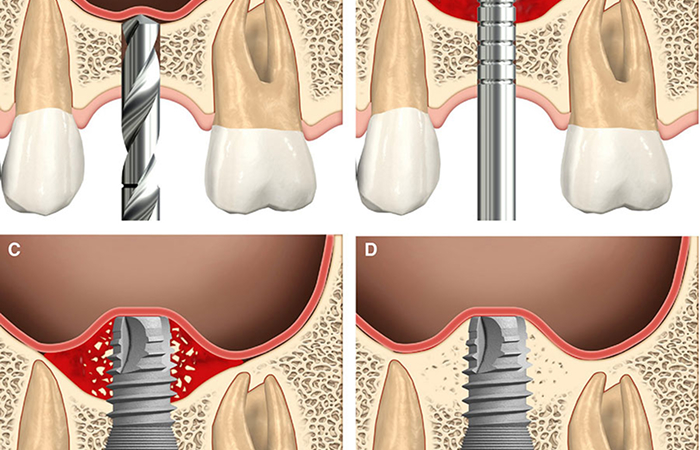
Closed Sinus Lifting
Closed sinus lifting is a minimally invasive surgical procedure performed to enable implant placement in cases where bone height in the posterior region of the upper jaw is limited. The procedure is based on the controlled elevation of the sinus floor through the implant site. Compared to open sinus lifting, it requires less surgical intervention and the healing process is generally more comfortable. The procedure is most commonly carried out in a clinical setting under local anaesthesia or sedation.
What is closed sinus lifting?
Closed sinus lifting is a bone augmentation technique applied when the existing bone height in the posterior maxillary region is insufficient for implant placement but remains close to the required level. After preparing the implant site, the sinus membrane is gently elevated using specialised hand instruments, and bone graft material is added when deemed necessary. In most cases, implant placement can be performed during the same session.
In which cases is closed sinus lifting performed?
It is performed in patients with limited bone loss in the posterior upper jaw and in cases where the distance between the sinus floor and the jawbone has been reduced. This technique is preferred in treatments requiring a smaller amount of bone augmentation and where implants can be placed during the same procedure.
Points to consider before closed sinus lifting
Before the procedure, the patient’s general health status, existing systemic conditions, and regularly used medications should be evaluated in detail. The sinus anatomy and available bone volume should be analysed using radiographic imaging methods. Maintaining proper oral hygiene, including regular tooth brushing and the use of antiseptic mouthwashes, helps to reduce the risk of infection.
Points to consider after closed sinus lifting
In the days following the procedure, patients should avoid blowing their nose and should keep their mouth open when sneezing. Smoking and alcohol consumption are not recommended, as they may negatively affect the healing process. Medications prescribed by the clinician should be taken as directed, and careful attention should be paid to oral hygiene. Attending follow-up appointments regularly is important to ensure the successful completion of treatment.
