

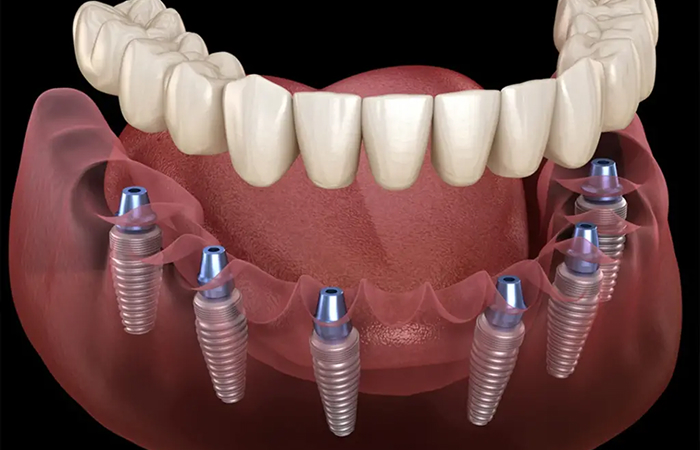
All-on-6 Implant Technique
The All-on-6 implant technique is an advanced implant treatment method designed to restore chewing function with fixed and aesthetic prostheses in patients who are completely edentulous or have experienced advanced tooth loss. In this technique, a full-arch fixed prosthesis is supported by six implants placed in a single jaw. The increased number of implants enhances prosthetic stability and improves load distribution. The procedure is generally performed in a clinical setting under local anaesthesia or sedation and, when necessary, may also be carried out under general anaesthesia in an operating theatre.
What is the All-on-6 implant technique?
The All-on-6 implant technique is based on supporting a full-arch fixed prosthesis with six implants placed in strategic regions of the jawbone. This approach allows chewing forces to be distributed more evenly across the implants. It is particularly aimed at achieving long-term, durable results in patients with sufficient bone structure.
In which cases is the All-on-6 implant technique applied?
It is applied in fully edentulous patients, individuals with high masticatory forces, and cases where maximum stability from a fixed prosthesis is required. It is also preferred in situations where adequate bone volume is present and additional implant support is planned.
Points to consider before the All-on-6 implant technique
The patient’s general health status, existing systemic conditions, and any medications used regularly should be carefully evaluated. Radiographic and tomographic examinations should be performed to assess the jawbone structure, implant placement plan, and prosthetic design. Maintaining good oral hygiene, including tooth brushing and the use of an antiseptic mouthwash, helps reduce the risk of infection.
Points to consider after the All-on-6 implant technique
Following the procedure, medications prescribed by the clinician should be taken regularly, and hard or hot foods should be avoided during the initial days. Smoking and alcohol consumption are not recommended, as they may negatively affect the healing process. Proper oral hygiene should be maintained, and regular follow-up appointments should not be missed. Periodic dental check-ups are essential for the long-term and healthy use of the prosthesis.
