

Block Bone Grafting (Augmentation)
Block bone grafting (augmentation) is an advanced surgical procedure performed to provide sufficient bone support for implant and prosthetic treatments in cases of severe loss of jawbone volume. With this method, the deficient bone area is reinforced using a block of bone tissue, aiming to reconstruct the jawbone structure. It is particularly intended to achieve long-term and successful treatment outcomes in patients with advanced bone resorption. The procedure is generally carried out in a clinical setting under local anaesthesia or sedation and, in complex cases, may also be performed under general anaesthesia in an operating theatre.
What is block bone grafting?
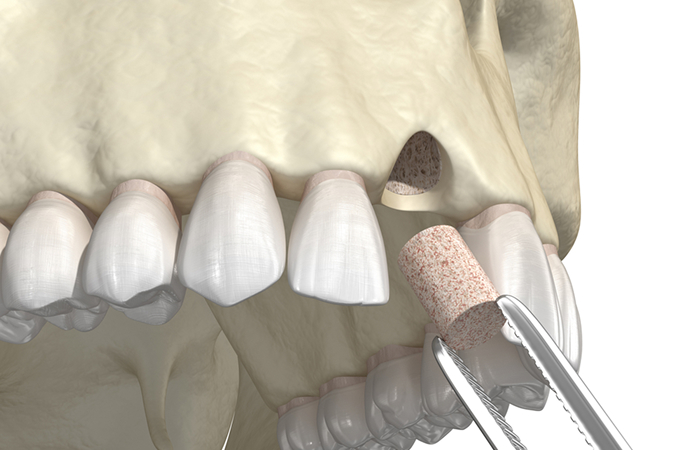
Block bone grafting is the placement of a single-piece block of bone tissue into areas where bone volume is severely insufficient. This bone tissue may be harvested from the patient’s own body or obtained from suitable donor sources. The placed bone block integrates with the existing bone tissue over time and supports new bone formation.
In which cases is block bone grafting performed?
It is performed in patients with advanced bone resorption who do not have sufficient bone volume for implant placement. It is particularly preferred in cases with significant bone loss in aesthetic zones and in situations where the jawbone has become severely thinned following long-term tooth loss.
Points to consider before block bone grafting
Before the procedure, the patient’s general health status, existing systemic conditions, and regularly used medications should be evaluated in detail. The extent of bone loss and the need for grafting should be determined through radiographic and tomographic examinations. Maintaining proper oral hygiene, including regular tooth brushing and the use of antiseptic mouthwashes, helps to reduce the risk of infection.
Points to consider after block bone grafting
After the procedure, the grafted area should be protected, and hard and hot foods should be avoided. Smoking and alcohol consumption are not recommended, as they may negatively affect bone healing. Medications prescribed by the clinician should be taken as directed, and oral care should be performed carefully. Attending follow-up appointments regularly is of great importance for monitoring healthy bone integration.
